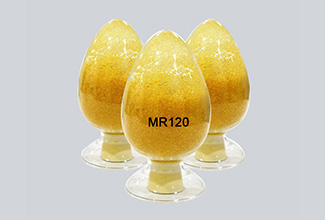
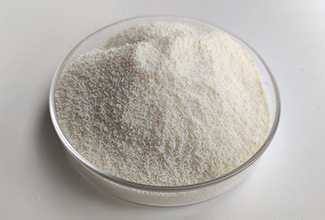
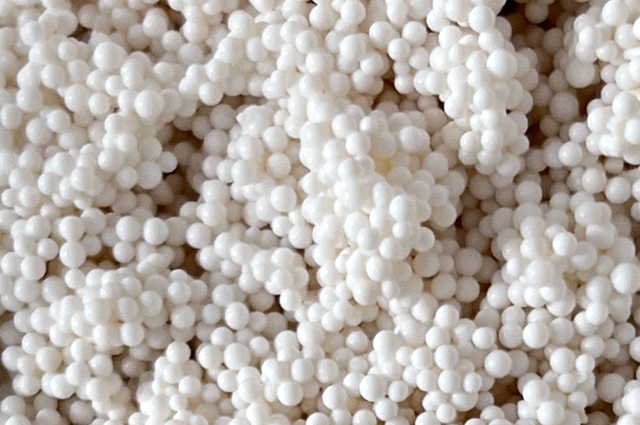
In modern water treatment systems, ion exchange resins serve as indispensable core filtration materials, finding widespread application in industrial water treatment, commercial and residential water purification, and wastewater treatment. Their fundamental operating principle involves reversible exchange reactions between the resin's functional groups and the anions and cations present in the water; this process precisely removes contaminants—such as hardness ions, heavy metals, acidic or alkaline ions, and organic impurities—thereby optimizing water quality to meet required standards.
Common Types and Key Characteristics of Ion Exchange Resins Used in Water Treatment
Different types of ion-exchange resins vary significantly in terms of structural characteristics, exchange mechanisms, and suitable applications; these differences serve as the fundamental basis for resin selection. Mainstream resins designed for water treatment can be categorized into four major types, each with its own specific scope of application and performance advantages.
Cation Exchange Resins
Cation exchange resins are primarily used to adsorb cationic impurities—such as calcium, magnesium, sodium, and iron—from water. They are categorized into strong-acid and weak-acid types. Strong-acid cation resins operate over a wide pH range and offer rapid exchange kinetics, making them standard materials for water softening and basic demineralization. Weak-acid cation resins are highly targeted, primarily removing carbonate hardness; they exhibit superior resistance to fouling, making them suitable for treating high-alkalinity raw water.
Anion Exchange Resins
Anion exchange resins focus on removing anionic impurities such as sulfates, chlorides, and nitrates, and are similarly classified into strong-base and weak-base types. Strong-base anion resins can remove the majority of inorganic anions and some organic impurities, serving as a core material in ultrapure water production. Weak-base anion resins adsorb only strong-acid anions and offer lower regeneration costs, making them suitable for simple demineralization and wastewater pretreatment applications.
Mixed-Bed Ion Exchange Resins
Mixed-bed resins consist of a specific blend of cation and anion resins, enabling the simultaneous removal of both anions and cations. They provide extremely high demineralization precision, capable of producing high-purity and ultrapure water. These resins are primarily used in industries with stringent water quality requirements, such as precision manufacturing, electronics, and pharmaceuticals.
Specialty Functional Resins
Specialty resins include functional types such as chelating resins and macroporous resins, designed to address water quality issues that conventional resins cannot handle. Chelating resins exhibit strong selective adsorption for heavy metal ions and are widely used in the treatment of industrial heavy metal wastewater. Macroporous resins feature a highly developed pore structure and excellent resistance to organic fouling and oxidation, making them suitable for complex raw water conditions with high organic content.
Define Water Treatment Objectives and Key Raw Water Quality Parameters
Any scientifically sound resin selection process must be grounded in actual water treatment requirements and raw water quality data. Selecting resins without regard for water quality parameters and treatment objectives inevitably leads to issues such as poor purification performance, rapid resin failure, and skyrocketing operation and maintenance costs; this constitutes a fundamental principle of resin selection in the water treatment industry.
Define Core Water Treatment Objectives
Different water purification needs require distinct resin selection strategies. Common water treatment objectives fall into five categories: water softening (removing calcium and magnesium ions to prevent scaling); demineralization (reducing Total Dissolved Solids [TDS] to produce pure water); heavy metal removal (adsorbing harmful metals such as lead, cadmium, copper, and nickel); organic pollutant removal (degrading or adsorbing organic impurities); and pH adjustment (optimizing water pH to meet standards for subsequent production processes).
Analyze Key Raw Water Quality Indicators
Raw water quality parameters provide the essential data foundation for resin selection. Key indicators include water hardness, pH value, Total Dissolved Solids (TDS), heavy metal content, organic pollutant concentration, and water temperature. The specific ranges of these indicators directly dictate the type of resin required; for instance, high-temperature raw water necessitates heat-resistant resins, while high-hardness raw water requires softening resins with high exchange capacity.
Key Performance Indicators for Ion Exchange Resin Selection
Resin performance parameters serve as the primary criteria for assessing suitability and selecting high-quality resins; they also constitute the core content of this selection guide. During the selection process, the following key indicators must be verified individually to comprehensively determine whether the resin suits the specific water treatment conditions, thereby avoiding operational risks associated with inferior or incompatible resins.
Exchange Capacity
Exchange capacity is the primary metric for measuring a resin's ion adsorption capability and is categorized into total exchange capacity and operating exchange capacity. Total exchange capacity represents the resin's maximum adsorption limit, whereas operating exchange capacity refers to the effective adsorption capacity under actual operating conditions. A higher operating exchange capacity allows for a greater volume of water treated per cycle and a longer regeneration interval, resulting in superior overall operational economics; consequently, it is the primary reference indicator for industrial resin selection.
Particle Size and Uniformity Coefficient
The particle size and uniformity of the resin directly affect water flow velocity, filtration resistance, and exchange efficiency within the water treatment system. Resins with uniform particle sizes facilitate even water flow distribution, minimize issues such as channeling and clogging, and ensure more complete ion exchange reactions. Conversely, excessive particle size variation leads to increased equipment resistance and reduced purification efficiency, significantly shortening the resin's service life.
Chemical and Thermal Stability
A resin's stability determines its suitability for specific water quality environments and application scenarios. Resins with high chemical stability can withstand a wide pH range and resist acid-base corrosion without undergoing adverse reactions with waterborne impurities. Thermal stability determines the resin's maximum operating temperature; for applications involving high-temperature industrial circulating water or high-temperature wastewater treatment, specialized high-temperature-resistant resins must be selected to prevent degradation or failure caused by heat.
Regeneration Efficiency and Fouling Resistance
Regeneration efficiency is directly linked to long-term operation and maintenance costs. Resins with high regeneration efficiency require fewer regeneration chemicals and less time to regenerate, restore performance thoroughly, and support repeated cycling. Fouling resistance determines the resin's service life in complex water quality conditions; in wastewater environments characterized by high levels of organic matter, impurities, or heavy metals, fouling-resistant resins are less prone to failure caused by impurity encapsulation, ensuring greater stability during long-term operation. 4.5 Mechanical Strength and Service Life. During the operation of water treatment equipment, resins are continuously subjected to physical stresses such as hydraulic impact, friction, and expansion/contraction. Resins with high mechanical strength resist breakage and pulverization, thereby preventing equipment clogging and secondary water contamination. Furthermore, the base material of the resin determines its theoretical service life; high-quality resins ensure years of stable operation, significantly reducing costs associated with equipment replacement and maintenance.
Resin Selection Guidelines for Various Water Treatment Scenarios
Water quality requirements and operating conditions vary significantly across different application scenarios, necessitating the selection of specific resin types tailored to each context. Based on mainstream global water treatment applications, standardized selection guidelines have been established to precisely meet the demands of various operating conditions.
Industrial Boiler Water Softening
The primary requirements for boiler feedwater are the removal of hardness and the prevention of scaling in pipes and equipment to ensure safe boiler operation. Strong-acid cation exchange resins are the preferred choice for this scenario; they offer high hardness removal efficiency, stable operation, and easy regeneration. These resins are well-suited to the continuous operation demands of industrial boilers and represent the standard global solution for boiler water treatment.
Industrial Ultrapure Water Production
Industries such as electronics, semiconductors, pharmaceuticals, and precision manufacturing demand extremely high water purity, requiring the removal of virtually all ionic impurities. Basic demineralization can be achieved using a combination of strong-acid cation resins and strong-base anion resins. However, producing high-purity ultrapure water requires mixed-bed ion exchange resins to achieve high-precision demineralization and meet ultrapure water standards.
Heavy Metal Wastewater Treatment
Wastewater from industrial electroplating, metallurgy, and chemical processing contains significant levels of heavy metal ions that conventional resins cannot effectively remove. Specialized chelating resins are required for this scenario; utilizing specific adsorption functional groups, they precisely capture various heavy metal ions. This ensures effluent quality consistently meets standards while enabling heavy metal recovery, balancing environmental protection with economic efficiency.
Residential and Commercial Water Purification
For applications such as commercial water purification for residential complexes and hotels, as well as whole-house residential systems, the core requirements are the removal of limescale, residual chlorine, and trace impurities, along with taste improvement. Operating conditions in these scenarios are relatively mild. Conventional cation softening resins paired with standard anion resins offer a cost-effective, low-maintenance solution that meets daily water purification needs.
Evaluation of Resin Regeneration and O&M Costs
Resin selection should not be based solely on initial purification performance; it requires a comprehensive assessment of regeneration difficulty, operational complexity, and long-term running costs. These are key factors for overseas industrial users, as they directly determine the project's long-term operational profitability.
Regeneration processes vary significantly across resin types: strong-acid and strong-base resins offer rapid regeneration and mature processing technology, making them compatible with automated O&M systems; weak-acid and weak-base resins consume fewer chemicals, resulting in lower O&M costs; while specialty chelating resins and macroporous resins involve more complex regeneration processes, they deliver irreplaceable, targeted treatment results.
Selection decisions should weigh factors such as in-house O&M capabilities, budget, and operational load. For small, lightweight water purification systems, priority should be given to general-purpose resins that are easy to regenerate and require minimal maintenance; for large-scale industrial systems operating continuously, functional resins can be selected to achieve stable purification performance that offsets O&M costs.
Compatibility Verification for Water Treatment Equipment Systems
No matter how high-quality the resin is, it cannot deliver optimal performance if it is incompatible with the existing water treatment equipment. During the selection process, it is essential to verify equipment parameter compatibility to ensure a perfect match between the resin and the equipment's operating conditions, thereby guaranteeing stable system operation.
Key verification parameters fall into four main categories: first, the equipment's water flow velocity, which must align with the resin's ion-exchange reaction rate to prevent insufficient exchange caused by excessive flow; second, the equipment's pressure-bearing capacity, as resin loading alters flow resistance and the system must operate within the equipment's pressure limits; third, the resin bed height, given that different resins have strict requirements for bed depth—insufficient height can compromise purification precision; and fourth, the specifications of the filtration components, which must match the resin particle size to prevent resin loss or equipment clogging.
Common Pitfalls in Resin Selection and Mitigation Strategies
In global water treatment projects, most selection issues stem from recurring misconceptions. Avoiding these common errors can significantly improve selection accuracy, thereby reducing equipment failures and cost wastage.
Indiscriminate Selection of High-Spec Resins
To ensure water purification quality, many users blindly purchase high-end specialty resins, leading to procurement and operational costs that far exceed actual requirements. Mitigation Strategy: Select resins based on specific needs; use general-purpose resins for standard purification scenarios and match functional resins only to complex operating conditions, thereby balancing performance and cost.
Overlooking Water Temperature Compatibility
Water temperature is a critical parameter that is easily overlooked. Standard resins have limited heat resistance and can rapidly age, fracture, or fail under high-temperature conditions. Mitigation Strategy: Confirm the year-round water temperature range before selection; choose specialized high-temperature-resistant resins for high-temperature conditions and highly stable standard resins for low-temperature environments.
Ignoring Resin Fouling Resistance
When dealing with complex raw water containing high levels of organic matter or impurities, standard resins are prone to fouling and clogging, leading to a rapid loss of ion-exchange capacity. Mitigation Strategy: For complex water quality, prioritize the use of macroporous resins or specialized fouling-resistant resins to extend service life and reduce replacement frequency.
Conclusion
The scientific selection of ion-exchange resins for water treatment involves a comprehensive and standardized logical framework. The core process can be summarized as follows: defining water treatment objectives and raw water quality parameters; understanding the key characteristics of various resin types; verifying critical performance indicators; matching resins to specific application scenarios; evaluating operational costs and equipment compatibility; and avoiding common selection pitfalls.
There is no such thing as a universal "all-purpose resin"; there is only the optimal resin suited to specific operating conditions. A tailored selection approach—based on actual water quality data, operating conditions, and maintenance requirements—is essential to maximize purification efficiency, ensure the long-term stable operation of the water treatment system, and effectively control operational costs, thereby achieving both water quality compliance and economic benefits.